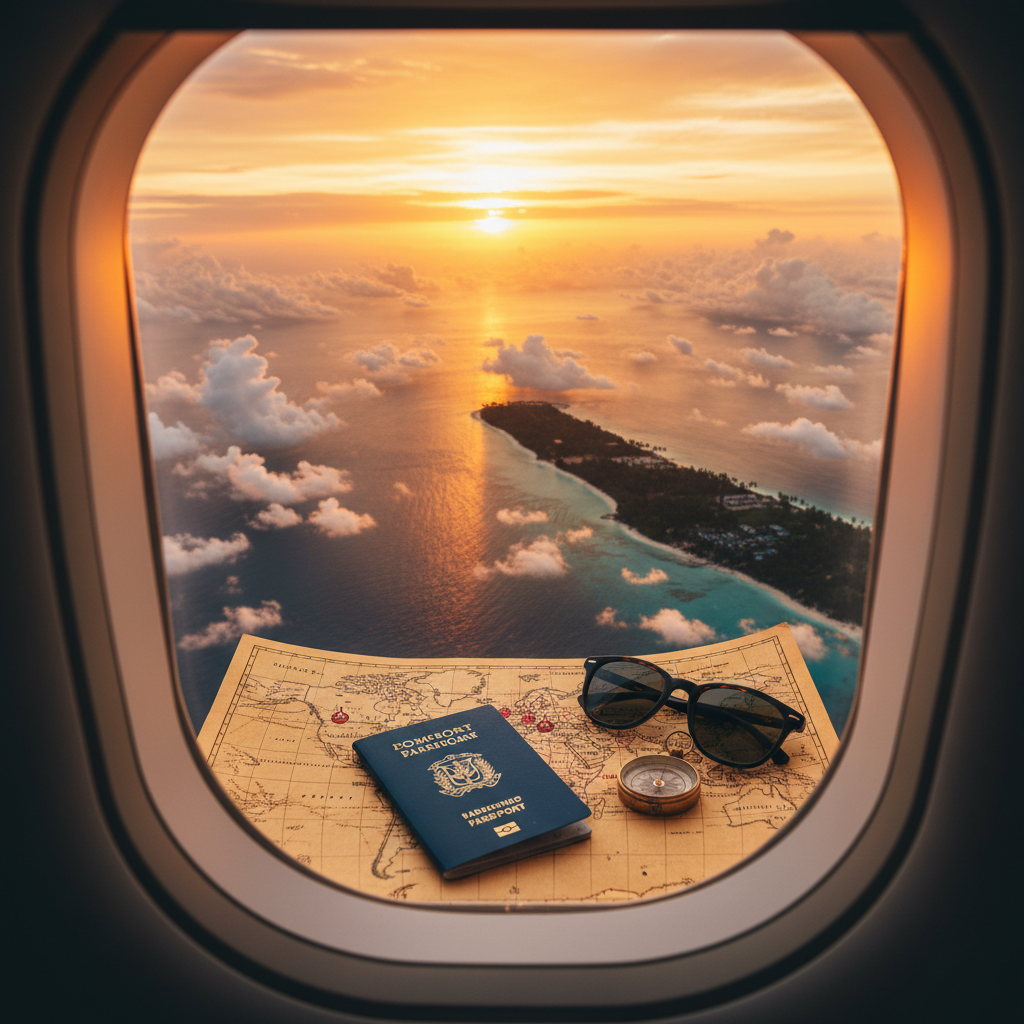
Dreaming of strolling through Paris, exploring Rome, or enjoying the beaches of Spain? If you're traveling with a Dominican passport, this comprehensive guide is for you. Here we explain, step by step and without fuss, all the requirements to…
Dreaming of strolling through Paris, exploring Rome, or enjoying the beaches of Spain? If you're traveling with a Dominican passport, this comprehensive guide is for you. Here we explain, step by step and without fuss, all the requirements to apply for your Schengen visa in 2024, with a special focus on the mandatory travel insurance you can't do without.
Schengen Visa Requirements for Dominicans: 2024 Guide
What is the Schengen Visa and why do Dominicans need it?
Let's get straight to the point. The Schengen Area is an agreement between 27 European countries that abolished their internal borders, allowing free movement of people. For a traveler, this means that with a single visa, the "Schengen visa", you can enter one of these countries and then move through all the others without needing further permits or immigration controls, provided your total stay does not exceed 90 days within a 180-day period. It's like having a master key for almost the entire European continent.
Now, the million-dollar question: why does a Dominican need a visa and a Colombian or Peruvian doesn't? The answer lies in each country's diplomatic agreements with the European Union. Unlike 15 Latin American countries, Dominicans must still apply for a traditional Schengen visa for short stays in Europe; the ETIAS system does not currently apply to them. This is neither good nor bad, it is simply an administrative requirement. While citizens of countries like Argentina, Chile, or Mexico will only need an electronic travel authorization called ETIAS in the future (not yet implemented), Dominican passport holders must go through the full consular process to obtain the stamped visa in their passport.
The Schengen Area countries you can visit with this visa are:
- Austria
- Belgium
- Croatia
- Czech Republic
- Denmark
- Estonia
- Finland
- France
- Germany
- Greece
- Hungary
- Iceland
- Italy
- Latvia
- Liechtenstein
- Lithuania
- Luxembourg
- Malta
- Netherlands
- Norway
- Poland
- Portugal
- Slovakia
- Slovenia
- Spain
- Sweden
- Switzerland
Do not confuse the Schengen Area with the European Union. Countries like Ireland, Cyprus, Bulgaria, and Romania are in the EU but not in the Schengen Area, so you would need a different visa if that is your main destination. On the other hand, Iceland, Liechtenstein, Norway, and Switzerland are not in the EU but are part of Schengen. With the Schengen visa, you can visit these 27 countries without problems.
Schengen Visa Requirements Checklist for Dominicans
Having all your papers in order is 80% of the success in your application. An incomplete file is a sure cause for delays or, worse, a refusal. Below, we detail each document you need to gather before your appointment at the visa application center in Santo Domingo. Take note and organize your folder!
1. Schengen Visa application form
This is the main document. You must download it from the website of the consulate or the visa management center (VFS Global) corresponding to your main destination country. Complete it digitally or in clear, legible block letters, without any crossings out. Make sure all information matches that in your passport and other documents. Finally, you must sign it in the indicated spaces. If the applicant is a minor, both parents or legal guardians must sign.
2. Valid Dominican passport
Your passport is your identity. It must meet three crucial conditions:
- Validity: It must be valid for at least 3 months after the date you plan to leave the Schengen Area. For example, if your return flight is September 30, your passport must expire, at a minimum, on December 30 of that year. If it is about to expire, renew it before applying.
- Blank pages: It must have at least two completely blank pages. Pages with stamps, however small, are not valid. These pages are for stamping the visa label.
- Issuance date: It must not be more than 10 years old.
3. Two recent passport-sized photographs
The photos must be identical and meet international standards:
- Size 3.5 x 4.5 cm.
- Completely white and plain background.
- Clear face, looking directly at the camera, with a neutral expression.
- No sunglasses or hats (unless for religious reasons, but the face must be visible).
- Taken within the last 6 months. Do not try to use an old photo, they will notice!
4. Round-trip flight reservations
Be careful: reservation, not purchase! No consulate requires you to buy tickets before your visa is approved. What you need is a flight itinerary issued by an airline or travel agency that shows your full name, the entry and exit dates for the Schengen Area, and flight numbers. This document confirms your intention to return to the Dominican Republic.
5. Proof of accommodation
You must demonstrate where you will stay throughout your trip. Valid options are:
- Hotel reservations: Print the booking confirmations for each hotel or apartment (like Airbnb) for each city you visit. Make sure your name appears as the main guest.
- Invitation letter: If you will be staying at the home of a friend or family member who legally resides in Europe, you need an official invitation letter. The format and process for obtaining it vary by country (in Spain, for example, it is processed at a police station). This document is a formal declaration that this person will be responsible for your accommodation.
6. Detailed travel itinerary
It doesn't have to be a military schedule, but it should be a clear and coherent plan of what you will do. A simple document that details, day by day or by city, what places you will visit, if you will move between countries (and how, e.g., train, plane), etc. This shows the consul that your trip is for tourism and is well-planned.
7. Proof of financial solvency and ties to home country
This point is fundamental. You must convince the consulate that you have the money to cover your trip and, more importantly, reasons to return to the Dominican Republic. The most common documents are:
- Bank statements: From the last 3 to 6 months. They must show a healthy final balance and regular transactions. Depositing a large sum of money just before applying is not helpful.
- Employment letter: On company letterhead, indicating your position, salary, length of employment, and, very importantly, that you have approved leave for your travel dates and that you will return to your position upon your return.
- Proof of income: Tax returns, payroll stubs (pay slips).
- Other ties: Property titles (house, vehicle), marriage certificates, birth certificates of children. Anything that demonstrates you have a stable life in the DR to return to.
8. International medical travel insurance
This is not optional, it is mandatory. You must present a travel insurance policy that meets very specific requirements. Given its importance, we will detail it thoroughly in the next section.
The key requirement: your mandatory international medical travel insurance
For citizens of the Dominican Republic, travel insurance is a non-negotiable requirement for the Schengen visa, with a minimum coverage of €30,000. Failure to present a valid policy that meets all specifications is grounds for immediate and automatic rejection of your application. But why are they so strict about this? The reason is simple: to protect their public health systems. Schengen countries want to ensure that, should you suffer an accident or illness during your stay, you have the means to cover the very high European medical costs without becoming a financial burden for the host country.
Imagine having an emergency appendectomy in Germany. Such an operation can easily cost between €8,000 and €15,000. Or a fracture from a fall in the streets of Prague, which could involve hospitalization and exceed €10,000. Without insurance, you would be responsible for paying that debt, and if you couldn't, the local health system would have to bear it. To avoid this, they require you to arrive protected from day one.
Your travel insurance must, without exception, meet the following conditions to be accepted:
- Minimum coverage: It must offer coverage for medical expenses due to illness or accident of at least €30,000 EUR (or its equivalent in dollars, which is usually USD 30,000 to USD 35,000 to be safe).
- Territorial validity: The policy must explicitly state that it is valid throughout the Schengen Area, not just in the country where you are applying for the visa.
- Repatriation coverage: It must cover the costs of medical repatriation (emergency medical transfer to the Dominican Republic) and repatriation of mortal remains in case of death.
- Coverage period: It must cover the entirety of your stay, from the day you arrive in Europe until the day you leave. It is even recommended to purchase it with a couple of extra days in case of flight delays.
- Zero deductible: Ideally, the insurance should have no deductible, which means the company covers expenses from the first euro.
When you purchase your insurance, the company will issue a certificate or consular letter. This is the document you must print and attach to your visa application. It must clearly show your name, the validity period, the geographical coverage, and the amount of medical assistance. Purchasing the correct insurance is one of the smartest and safest investments in your visa process. Don't take chances.
The ideal and affordable insurance for your Visa: Baraglo plans
We understand that the visa process already involves several expenses, so finding insurance that meets all requirements without breaking your budget is crucial. At Baraglo, we have designed specific plans with Dominican travelers applying for a Schengen visa in mind. Not only do we meet 100% of the requirements, but we also make it easy and affordable for you.
Our main recommendation is the Visa Schengen plan. It was specifically created for this process. With coverage of USD 30,000 (equivalent to the required €30,000), repatriation, and validity throughout the territory, it is the perfect option to meet the consular requirement safely and at the best price. The cost of insurance that meets Schengen requirements for a Dominican can be as low as $2.99 USD per day with Baraglo's Visa Schengen plan.
Now, if you are looking for greater peace of mind and more robust protection for your trip (which is always recommended), you can opt for plans with higher coverage that are also 100% valid for your application. For a few extra dollars a day, you protect yourself against much more serious unforeseen events.
- Standard Plan: Offers you USD 35,000 coverage, giving you an extra cushion of protection for just $4.99 USD per day.
- Essential Plus Plan: This is one of the smartest options. For only $5.29 USD per day, you raise your coverage to USD 50,000 (over €45,000), which gives you invaluable peace of mind against any serious medical eventuality.
All our plans include essential
travel assistance coverages, such as assistance for lost luggage, trip cancellation, and more. Additionally, if the applicant is over 75 years old, a 50% surcharge is applied to the base price, a standard industry practice, but maintaining Baraglo's excellent cost-benefit ratio.
Baraglo plan comparison for Schengen Visa
| Plan |
Price per day (approx.) |
Medical Coverage |
Meets Schengen Requirement |
| Visa Schengen |
USD $2.99 |
€30,000 (USD 30,000) |
✔ Yes |
| Standard |
USD $4.99 |
USD 35,000 |
✔ Yes |
| Essential Plus |
USD $5.29 |
USD 50,000 |
✔ Yes |
Step by step: how to apply for the Visa in the Dominican Republic?
Once you have all your documents ready, the application process is quite structured. Most Schengen embassies in Santo Domingo have outsourced the reception of applications to the VFS Global center. Here's a step-by-step guide.
-
Determine which consulate to apply to: This is key. You must apply for the visa at the consulate of the country that will be your main destination. How to know which one?
- If you visit only one country, you apply at the consulate of that country.
- If you visit several countries, you apply at the consulate of the country where you will spend the most nights.
- If you spend the same number of nights in several countries, you apply at the consulate of the country through which you will first enter the Schengen Area.
For example, if you travel for 15 days, spend 7 in Spain, 5 in France, and 3 in Italy, you must apply at the Spanish Consulate.
-
Visit the VFS Global Dominican Republic website: Search for the country you are applying to within the VFS portal. There you will find the specific application form, the updated document list, and the link to create your account and schedule an appointment.
-
Gather ALL the documentation from the checklist: Using our guide and the official VFS list, organize your folder with originals and copies as required. Do not leave a single document out. This is where you purchase your Schengen Visa travel insurance and print the certificate.
-
Schedule your appointment: Through the VFS Global online system, choose an available date and time to submit your documents. Appointments fill up quickly, especially during high season, so do it well in advance.
-
Attend your appointment at VFS Global: On the day of your appointment, go to the center located in Santo Domingo. An agent will check that your file is complete, take your biometric data (fingerprints and digital photograph), and accept your application to send it to the corresponding consulate.
-
Pay the consular and service fees: At VFS, you will need to pay two amounts: the visa fee which goes to the consulate and the VFS service fee for their management. We explain the costs further below.
-
Await the decision and collect your passport: The standard processing time is 15 calendar days, but it can extend up to 45 days in complex cases or high season. You can track the status of your application on the VFS website. Once the consulate makes a decision and returns your passport to VFS, you will receive a notification to pick it up. Hopefully, it will come with your visa stamped! To better understand the process, you can read about how travel insurance works and why it is so integral to this process.
Costs associated with the Schengen Visa for Dominicans
Budgeting for your visa is important. Costs are divided into three main categories and are per person. Please note that amounts in euros may vary slightly in their equivalent in Dominican pesos or dollars depending on the daily exchange rate.
- Schengen visa fee: The consular fee for the Schengen visa is approximately €80 for adults. For children aged 6 to 12, the fee is €40, and children under 6 are exempt. This payment is made at VFS Global and is for the embassy.
- VFS Global service fee: For managing your application (document review, biometrics, etc.), VFS Global charges an additional service fee. This amounts to around €30-€40 per applicant.
- Cost of mandatory travel insurance: This cost varies depending on the duration of your trip and the coverage you choose. As we saw, with Baraglo, you can meet this requirement for as little as $2.99 USD per day. For a 15-day trip, this would be less than $45 USD, a minimal investment for an indispensable requirement.
In total, an adult should budget around €110-€120 (excluding insurance) just for the application fees. The cost of insurance adds to this, but as you have seen, it is a very reasonable fraction of the total trip cost.
Ready to take the first step towards your European adventure? Don't let a mandatory requirement stop you. Quote and purchase your Schengen visa travel insurance with Baraglo in less than 5 minutes. Get your certificate instantly and submit an impeccable consular file. Get your Schengen insurance here and travel with peace of mind.
Frequently Asked Questions
How far in advance should I apply for a Schengen Visa?
It is recommended to start the application process at least 6 weeks before your trip. The maximum advance time to apply is 6 months before the departure date. The official processing time is 15 calendar days, but during high season or if your case requires a more detailed review, it can take up to 45 days. Don't leave it until the last minute.
How much money do I need to show for a Schengen Visa from the Dominican Republic?
There is no single figure, but you must demonstrate that you have sufficient funds to cover your expenses. An average of between €65 and €100 per day of stay is calculated, depending on the country you visit and whether your accommodation is already paid for. For example, for a 10-day trip, it is advisable to show access to funds of at least €800-€1,000, in addition to having flights and hotels already booked.
Is Baraglo's Schengen Visa travel insurance accepted by all embassies?
Yes, all our plans that meet the requirement, especially the 'Visa Schengen' plan, are designed to be accepted by all Schengen Area embassies and consulates by meeting the minimum coverage of €30,000, medical and remains repatriation, and validity throughout the territory. We issue a clear and concise consular certificate that you can present with full confidence.
If my Visa is denied, will I get my money back?
Consular fees and VFS Global service fees are generally non-refundable, as they cover the cost of processing your application, regardless of the outcome. However, at Baraglo, we understand this situation and offer flexible policies. If you present the official proof of visa rejection, you can request the cancellation and refund of your travel insurance policy (small administrative fees may apply). Contact our team to learn about your options.
 Baraglo