Everything Dominicans need to know about travel insurance for Brazil: medical costs, mandatory vaccines, health risks, and coverage plans.
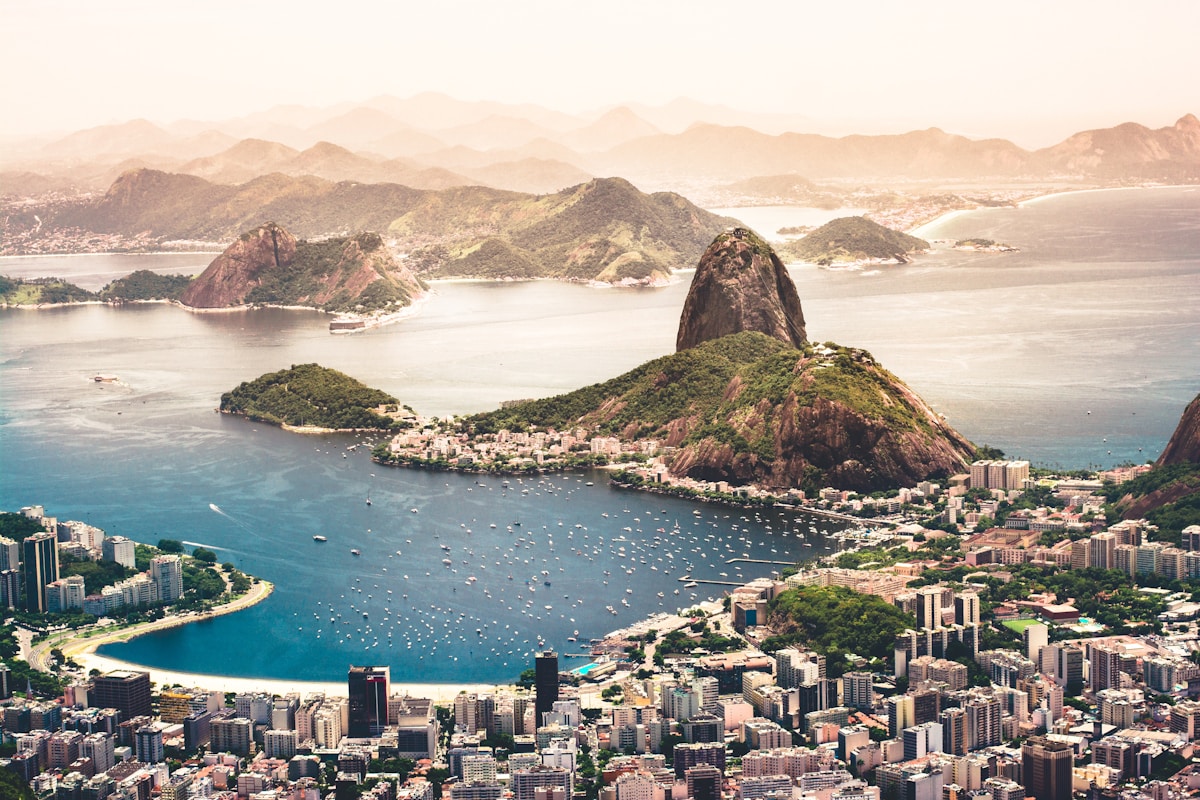
Brazil, the South American giant, is a destination that vibrates in the imagination of many Dominicans. From the iconic beaches of Rio de Janeiro and Florianópolis, passing through the unparalleled energy of the Salvador de Bahia Carnival, to the wild adventure in the Amazon and the majesty of the Iguazu waterfalls. However, this continental country, with its diversity of climates and ecosystems, presents specific health risks and a healthcare system with particularities that every Caribbean traveler should be aware of and prepare for. Traveling without adequate protection is risking not only your health, but also your financial stability.
🇧🇷 Quick Summary: Although Brazil does not legally require travel insurance, Dominican travelers do need to present the **yellow fever vaccination certificate** to enter. A simple medical mishap can turn into a considerable debt, with hospitalizations that can cost between **R$5,000 and R$50,000** (approximately USD $1,000 - $10,000). Baraglo travel insurance, with plans starting from just **$3.19 USD per day**, provides you with comprehensive coverage for medical expenses, medical evacuation, and other eventualities, ensuring your peace of mind.
Why do you need travel insurance for Brazil? beyond the mandatory
The question is not whether you need insurance, but why you would risk traveling without it. The freedom to explore a country as vast as Brazil comes with a responsibility: to protect yourself against the unexpected. A sprain on the cobblestone streets of Paraty, food poisoning after trying an exotic dish in Belém, or a sudden fever in the middle of the Amazon jungle can turn your dream trip into a logistical and financial nightmare.
The real cost of an unforeseen event: a smart investment
Imagine the scenario: you're enjoying the sun on Copacabana, you fall and suffer a minor fracture. What might be an inconvenience at home, in Brazil becomes an emergency in a foreign language and with a healthcare system you're unfamiliar with. Quality private clinic care is excellent, but its costs are prohibitive for an uninsured tourist. A simple emergency consultation can exceed $400 USD, and if surgery is required, the bill can easily amount to more than $15,000 USD.
For the cost of a daily latte, Baraglo travel insurance shields you against these catastrophic debts. It's not an expense, it's the smartest investment you'll make for your trip, ensuring that your only concern is to enjoy every moment.
Specific health risks for Dominicans in Brazil
Although we share a tropical climate, the Brazilian ecosystem is much broader and harbors diseases that are not common or do not exist in the Dominican Republic. It is crucial to be informed.
| Health Risk |
Areas of Major Impact |
Risk Level for Tourists |
| Yellow fever |
Amazon Region, Mato Grosso, Minas Gerais, interior of São Paulo and southern states. |
🔴 High (Mandatory Vaccination) |
| Dengue (different strains) |
Throughout the country, especially in urban areas and during the rainy season (summer). |
🟡 Moderate to High |
| Zika and Chikungunya |
Predominantly in the Northeast and North of the country. |
🟡 Moderate |
| Malaria (Paludism) |
Amazon Region (states such as Amazonas, Pará, Acre). Manaus and Belém included. |
🔴 High in endemic areas |
| Chagas disease |
Rural and impoverished areas, associated with precarious housing. |
🟢 Low for conventional tourists |
⚠️ Important: Although we are familiar with dengue in the Dominican Republic, there are four different serotypes of the virus. Having had dengue in the DR does not guarantee immunity against the strains circulating in Brazil. A second infection with a different serotype increases the risk of developing severe dengue. Therefore, prevention (use of repellent, appropriate clothing) is essential, and having medical insurance is indispensable.
Mandatory and recommended vaccines: your health passport
Yellow fever — MANDATORY for Dominicans
This is the most important and non-negotiable entry requirement. Dominican citizens must present the International Certificate of Vaccination or Prophylaxis (ICVP), known as the "yellow card," demonstrating yellow fever vaccination to enter Brazil. The vaccine must be administered at least 10 days before your travel date to be considered valid.
How and where to get vaccinated in the Dominican Republic? The process is simple:
- Schedule your appointment: Contact the International Vaccination Center of the Ministry of Public Health or an authorized private clinic, such as the Dominican Red Cross.
- Go with your passport: It is necessary for the certificate to be filled out with your official data.
- Receive the vaccine and the certificate: The cost usually ranges between RD$1,500 and RD$3,000.
- Guard it like gold! Keep the yellow certificate with your passport at all times during your trip. You will be asked for it when checking in at the airport and upon arrival at immigration in Brazil.
Other highly recommended vaccines
For complete protection, consult your doctor about these additional vaccines:
- Hepatitis A and B: Hepatitis A is transmitted through contaminated water or food, a risk on any trip. B is transmitted by bodily fluids.
- Tetanus-Diphtheria (Td): A booster shot is key if it has been more than 10 years since your last dose. Any cut or scrape can be an entry point.
- Typhoid fever: Especially recommended if you plan to visit rural areas, small towns, or are an adventurous traveler who enjoys street food.
Medical costs in Brazil: frightening figures (without insurance)
To understand the magnitude of financial risk, it is vital to know the costs of the Brazilian private healthcare system, which you will access with your travel insurance. Private hospitals and clinics in cities like São Paulo, Rio de Janeiro, or Brasília are among the best in Latin America, but their quality comes at a price.
| Medical Service |
Average Cost (R$) |
Approximate Equivalent in USD |
| Private medical consultation / specialist |
R$300 - R$800 |
$60 - $160 |
| Urgent care visit (without hospitalization) |
R$2,000 - R$8,000 |
$400 - $1,600 |
| Hospitalization day in private room |
R$3,000 - R$10,000 |
$600 - $2,000 |
| Emergency surgery (e.g., appendicitis) |
R$15,000 - R$80,000 |
$3,000 - $16,000 |
| Ground ambulance transport |
R$500 - R$3,000 |
$100 - $600 |
| Air medical evacuation (e.g., from the Amazon to São Paulo) |
R$50,000 - R$200,000+ |
$10,000 - $40,000+ |
💡 Case study: Sofia, a 28-year-old Dominican tourist, is hiking near Foz do Iguaçu. She slips and fractures her ankle. Evacuation to the nearest hospital, X-rays, consultation with the orthopedist, and immobilization quickly add up to R$12,000 (about $2,400 USD). With her Baraglo plan, she only had to make a call to our Spanish-speaking assistance center and we arranged and covered the expenses. Her only concern was choosing what shows to watch while recovering.
It is true that Brazil has the SUS (Single Health System), a public and free system that serves anyone in its territory. However, tourists should know that this system is often saturated, with waiting times that can be hours or even days for non-vital procedures, and the language barrier can be an insurmountable obstacle in a stressful moment.
Detailed comparison: which Baraglo plan is right for you in Brazil?
Choosing the right plan depends on your travel style and the destinations you will visit. Here we break down our most popular options so you can make the best decision. Remember that all our plans include 24/7 Spanish assistance and access to the private hospital network.
| Feature |
Baraglo Standard |
Baraglo Essential Plus |
Baraglo Premium |
| Maximum Medical Coverage |
$35,000 USD |
$50,000 USD |
$100,000 USD |
| Price per day from |
$4.99 USD |
$5.29 USD |
$8.99 USD |
| Ideal Traveler Profile |
Urban traveler, city-breaks, popular beaches. |
The perfect balance. Mixed trips, families, greater peace of mind. |
Adventurers, remote area explorers, maximum protection. |
| Recommended Destinations |
Rio de Janeiro, São Paulo, Florianópolis, Salvador (city). |
All of Brazil, including road trips, Chapada Diamantina, Northeast. |
Amazon (Manaus), Pantanal, Jalapão, Lençóis Maranhenses. |
| Medical Evacuation |
✅ Included |
✅ Included |
✅ Included and reinforced for remote areas. |
🏥 Our Recommendation for Brazil: For most travelers, the Essential Plus ($50,000 USD) plan offers the ideal balance between robust coverage and an affordable price. However, if your itinerary includes the Amazon, the Pantanal, or any expedition to remote areas, the Premium ($100,000 USD) plan is not an option, it's a necessity. The extremely high cost of an air evacuation from these areas fully justifies the investment.
Not sure which one to choose? Don't worry. Use our quick quote tool and get a personalized recommendation in seconds to protect your trip to Brazil.
What to do in case of a medical emergency in Brazil
In a moment of panic, having a clear action plan is essential. If you have a medical emergency with your Baraglo insurance, follow these steps:
- Stay Calm and Find a Safe Place: Your safety comes first. If it's an accident, assess your surroundings.
- Call Baraglo's 24/7 Assistance Number: This is the most important step. Before going to any hospital on your own, contact us. The number is on your policy and in our confirmation emails. Save it in your phone.
- Explain Your Situation in Spanish: You will be attended by an operator who speaks your language. Describe what happened, your symptoms, and where you are.
- Follow Our Instructions: Our team will locate the nearest and most suitable hospital or clinic in our network for your condition. We will give you the address and coordinate your arrival with the medical center.
- Do Not Pay Out of Pocket (as much as possible): In most cases, Baraglo will manage direct payment with the hospital. You will not have to disburse large sums of money. Keep any receipts for minor expenses (like pharmacy) to request reimbursement.
Popular destinations and their specific risks
Rio de Janeiro
- Highlights: Christ the Redeemer, Sugarloaf Mountain, Copacabana and Ipanema beaches, Lapa nightlife.
- Main risk: Personal safety. Avoid walking on beaches at night, be careful with your belongings in crowds, and do not enter favelas without a certified and trusted local guide. Be wary of "arrastões" (quick mass robberies) on beaches.
- Reference private hospitals: Hospital Copa D'Or, Hospital Samaritano.
São Paulo
- Highlights: Financial and gastronomic capital. Paulista Avenue, Ibirapuera Park, world-class museums (MASP).
- Main risk: Air pollution and petty theft in crowded areas. Watch your pockets and bags on the subway and in commercial streets like Rua 25 de Março.
- Reference medical center: Hospital Israelita Albert Einstein (considered one of the best in all of Latin America).
Salvador de Bahía
- Highlights: Cradle of Afro-Brazilian culture. The historic Pelourinho center, capoeira, acarajé, and the most energetic carnival.
- Main risk: Dengue and other mosquito-borne diseases. Safety is also a concern in Pelourinho and other tourist areas at night.
- Carnival (February/March): It's an amazing experience, but massive crowds exponentially increase the risk of accidents, dehydration, and theft. Traveling during carnival without insurance is extremely imprudent.
Amazon (base in Manaus)
- Highlights: Jungle excursions, navigation on the Rio Negro and Solimões, wildlife spotting.
- Main risk: Malaria, yellow fever, and extremely limited access to complex medical care. A basic hospital can be hours away by boat.
- MANDATORY: You need insurance with high air evacuation coverage (Baraglo Premium Plan). In addition, consult your doctor about antimalarial prophylaxis weeks before your trip.
Frequently asked questions (FAQ)
- Do I need a visa to travel to Brazil from the Dominican Republic?
No. Dominican citizens can enter Brazil and stay as tourists for a period of up to 90 days without needing a visa. Your only essential entry documents are your passport with at least 6 months of validity and the international yellow fever vaccination certificate.
- Does insurance cover tropical diseases like malaria or dengue?
Yes, absolutely. All Baraglo travel assistance plans are designed to cover medical expenses derived from the treatment of acute and unexpected illnesses contracted during your trip. This includes medical care for malaria, dengue, zika, and yellow fever, among others.
- What happens if I get sick on an Amazon tour?
If you experience a medical emergency in a remote area like the Amazon, your Baraglo insurance is your lifeline. Upon contacting our assistance center, we will activate the evacuation protocol. This may involve fluvial, terrestrial transport, or air medical evacuation to the nearest hospital capable of treating your condition. This coverage is one of the most valuable and costly, and it is included in our plans.
- I am over 75 years old, can I purchase insurance to travel to Brazil?
Yes. At Baraglo, we believe that adventure has no age limit. We offer coverage for travelers over 75 years old, applying a 50% surcharge on the price of the chosen plan. We strongly recommend opting for plans with high medical coverage, such as Essential Plus or Premium, to ensure complete and adequate protection.
- Does my ARS health insurance in the Dominican Republic cover me in Brazil?
Generally, not directly or effectively. Most local health insurance plans in the DR do not have international coverage, and those that do usually work on a reimbursement basis (you pay everything out of pocket and then claim), with high deductibles, low caps, and a lot of paperwork. Travel insurance like Baraglo is designed for immediate assistance abroad, with direct payment to the hospital network and 24/7 support in your language.
Don't let an unforeseen event ruin your dream trip to the South American giant. Protect your health and your wallet. Quote and buy your travel insurance for Brazil in less than 2 minutes and get ready to enjoy samba, sun, and caipirinha with complete peace of mind.
 Baraglo